When business owners think about upgrading a commercial space, wall colors are often the first decision on the table. Paint samples, mood boards, and finishes receive plenty of attention. Yet one of the most powerful design elements influencing customer behavior, brand perception, and even employee productivity is frequently overlooked—the ceiling.
In commercial architecture, the ceiling does far more than “cover” a space. It shapes how people feel, how long they stay, and how they interact with the environment. At Meraia Concepts, we often see clients surprised by how a well-designed ceiling can transform a space more dramatically than any wall color ever could.
The Ceiling Is the First Spatial Experience People Feel
While walls are what people see, ceilings are what people experience. Ceiling height, form, and material directly influence how spacious or confined a room feels within seconds of entry. A poorly planned ceiling can make even the most expensive interiors feel uncomfortable, while a thoughtfully designed one can elevate a simple space into a premium experience.
This is why leading architecture firms in Dubai prioritize ceiling planning early in the design phase—long before surface finishes are finalized.
In commercial settings such as offices, retail stores, restaurants, and showrooms, ceiling design subtly guides how people move, pause, and engage.
Ceiling Design Shapes Customer Behavior
Wall colors influence mood, but ceiling design influences time spent. And time spent directly affects revenue.
- In retail spaces, ceilings can encourage customers to linger or move forward
- In cafés and restaurants, ceiling height impacts comfort and seating turnover
- In offices, ceilings affect focus, acoustics, and employee well-being
A low ceiling with poor lighting may subconsciously rush customers out. A layered or vaulted ceiling, on the other hand, creates visual interest that keeps people engaged longer—without them realizing why.
This behavioral impact is something our team considers carefully during commercial planning and is a key part of our architectural design services.
Lighting Lives in the Ceiling, Not on the Walls
Lighting is one of the strongest tools in commercial design, and it is inseparable from ceiling planning. Wall colors only reflect light; ceilings control it.
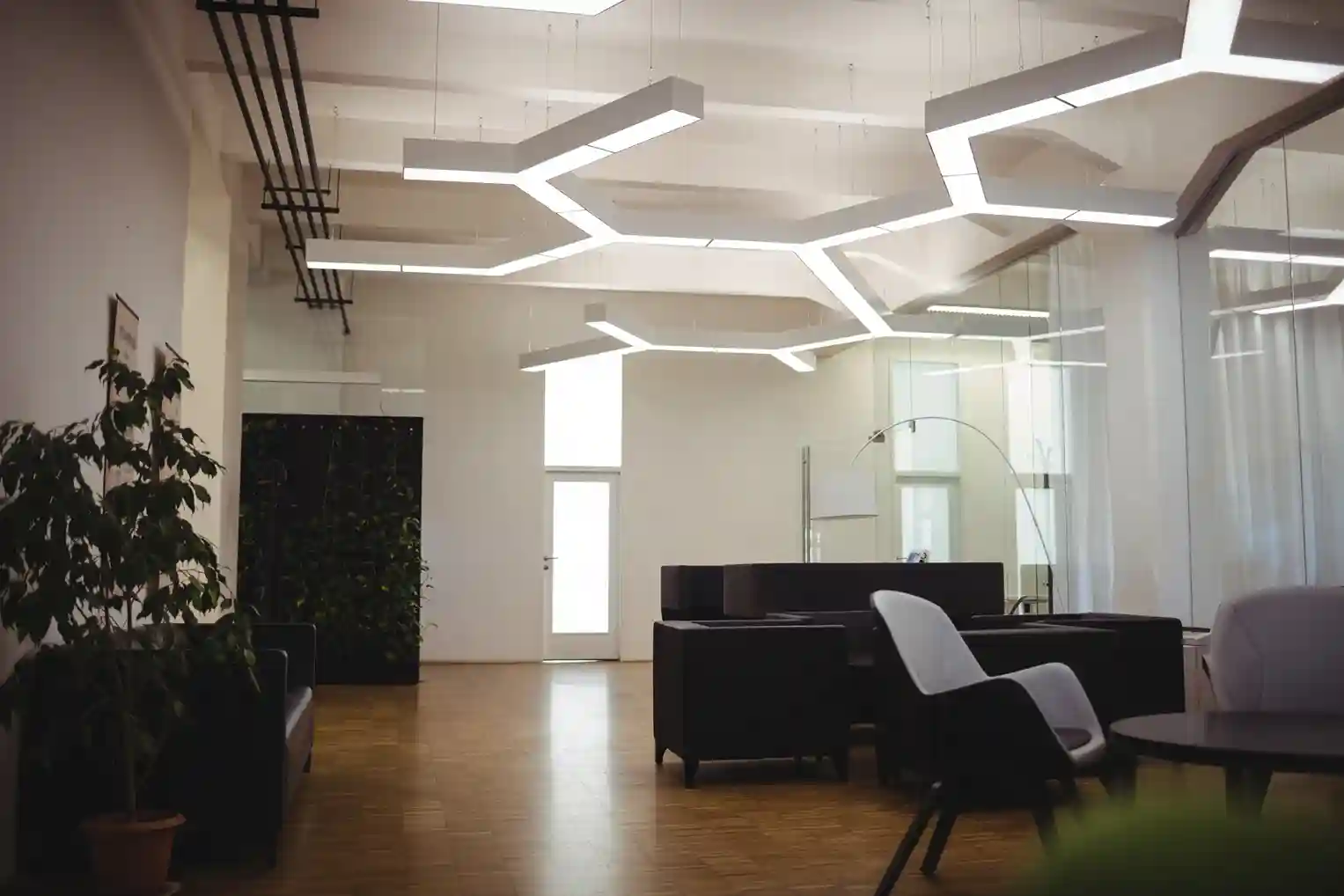
Cove lighting, recessed fixtures, suspended elements, and skylight integration all depend on ceiling structure. Without architectural planning, lighting becomes an afterthought—often resulting in glare, shadows, or flat illumination that kills ambiance.
A ceiling designed by the best architectural design studio integrates lighting seamlessly so it enhances products, people, and spaces rather than competing with them.
Acoustics: The Silent Business Factor
Many commercial spaces fail not visually, but acoustically. Echoes, noise buildup, and poor sound control can drive customers away even if the space looks beautiful.
Ceiling materials, heights, and treatments play a major role in sound absorption and distribution. Restaurants that feel “too loud,” offices where conversations carry too far, and retail spaces with uncomfortable noise levels often suffer from poor ceiling planning—not wall color choices.
Architectural ceiling solutions allow acoustics to be addressed discreetly, maintaining aesthetics while improving comfort.
Brand Identity Is Expressed Overhead
Think about some of the most memorable commercial interiors you’ve visited. Chances are, the ceiling played a role—whether through exposed structures, custom panels, dramatic forms, or subtle textures.
Ceilings are powerful branding tools. They can communicate:
- Innovation through modern geometric designs
- Luxury through layered detailing and concealed lighting
- Warmth through natural materials and proportions
Unlike walls, which are often filled with furniture or displays, ceilings remain consistently visible and uninterrupted—making them ideal for expressing brand character.
At Meraia Concepts, we often align ceiling concepts with the client’s brand strategy during early consultations for commercial projects.
Ceiling Design Solves Functional Challenges Early
When ceiling design is ignored initially, problems emerge later—forcing compromises. Mechanical systems, sprinklers, air conditioning ducts, and lighting all compete for ceiling space.
Architectural planning ensures these systems are coordinated, hidden where possible, and integrated where necessary. This avoids cluttered ceilings that distract from the space and undermine professionalism.
Clients who work with firms offering best architectural services benefit from fewer site conflicts, cleaner execution, and better long-term performance.
Wall Colors Can Change—Ceilings Define Structure
Paint colors are flexible. They can be updated seasonally or refreshed with minimal effort. Ceilings, however, define the spatial framework of a building.
Once constructed, ceiling height and form are far more difficult—and expensive—to change. This makes early architectural involvement critical. Decisions made at the ceiling level affect everything that follows, from lighting layouts to furniture proportions.
This is why ceiling design should never be treated as a decorative layer—it is a structural and experiential element.
Commercial Spaces Demand Architectural Thinking, Not Decoration
Interior decoration focuses on finishes. Architecture focuses on function, structure, and long-term value. Ceiling design sits firmly in the architectural domain.
Whether you’re planning a retail store, office, café, or showroom, ceiling design impacts:
- Energy efficiency
- Maintenance access
- Visual hierarchy
- Customer comfort
These are not decorative decisions—they are architectural ones.
By engaging professionals who understand both architecture and interior planning, business owners gain spaces that perform better, feel better, and last longer.
Why Early Architectural Consultation Matters
At Meraia Concepts, we guide clients to think beyond surface-level aesthetics. Our consultations focus on how spatial elements—especially ceilings—can support business goals, customer experience, and operational efficiency.
By integrating ceiling design into architectural planning from day one, we help clients avoid costly redesigns and missed opportunities later in the project.
If you’re planning a commercial space in Dubai and want design decisions that actually drive results, consulting an architectural team early can make all the difference.